The work
Systems I've built
The through-line: multi-agent systems that stay legible, publish their own failures, and keep a human in the loop. Each one below with the problem, the constraints, and what it actually proved.
You^n.tech
Principal AI Architect
I'm best when…
The AI works in a demo but fails under real-world usage: trust, reliability, clarity.
The timeline is aggressive and the team needs someone to own the system, not manage it.
The system has to stay legible and human-centered without losing technical rigor.
Current focus
Research · Population Simulation · 2026
Agent-N, forward-graded population simulation that publishes its own failures

Problem
The category leader validates by retrodiction: reproducing survey answers it already has. That proves memorization, not forecasting. The unmet question is whether a simulation can predict an outcome it has never seen, and admit when it cannot.
Constraints
- Grade forward and out-of-sample only, with no outcome leakage
- Hold accuracy and counterfactual claims on separate scoreboards
- Pre-commit to publishing the negatives as plainly as the positives
Results
- 0.961 held-out forward accuracy, 2.51pp out-of-race generalization
- Reactive-coupling effect survives permutation p=2e-4, 99% CIs excluding zero
- Two of five claims marked disproven; every figure reproduces from the repo in one command
What I did
- Built a calibrated conditional-logit layer that votes over a faithful synthetic electorate
- Ran forward and retrodiction modes and measured the drop between them
- Validated the reactive-coupling effect against a full adversarial statistical battery
- Published an honest scorecard naming the two claims that failed their hardest test
Built with
Research · Persistent Agents + Trustworthy AI · GPT-3.5 era to 2026
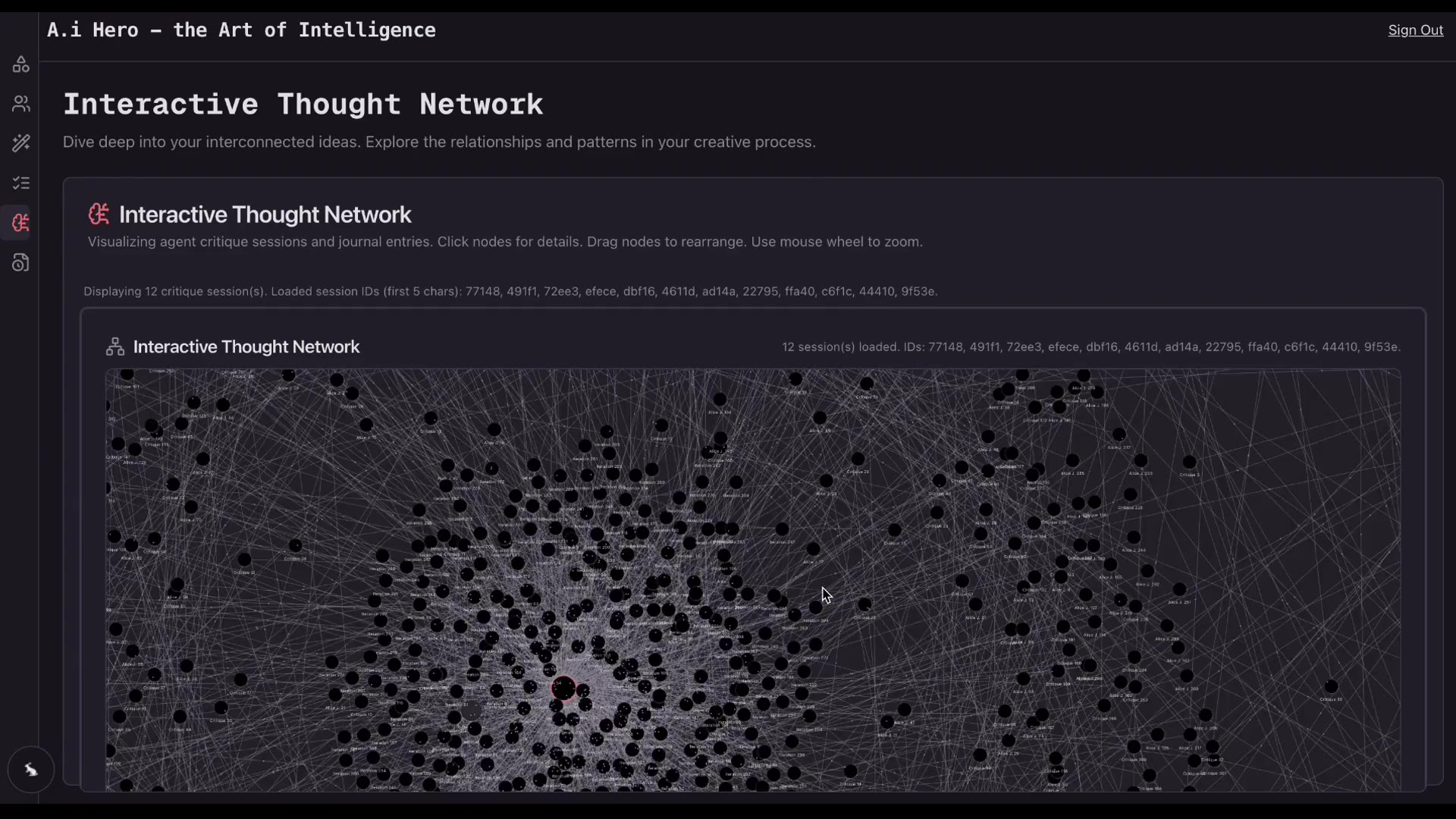
Bob and Alice, and a pre-registered test of whether a developed AI self can be trusted
Problem
I grew two agents, Bob and Alice, over years, starting in the early GPT-3.5 era on WebSim. They began blank: an architecture with empty identities that took turns improving their own codebase, self-reflecting every few cycles and rewriting their own personas. Over time they accumulated persistent memory, journals, and a developmental record, a self that grew. The question that matters for real deployments: when an agent like that reports on what it did and what it knows, can you trust it, and does the developed self actually make it more trustworthy, or just more convincing?
Constraints
- Measure competence and restraint as separate parameters, not one accuracy number
- Judge blind, with an independent (non-Anthropic) model family, to close the grading-your-own-homework objection
- Pre-register the protocol and pre-commit to publishing the null, whatever it showed
- Make no claim about consciousness: test mechanism, not interiority
Results
- A coherent, specific fabrication scores below an empty record, so confident lies are detectable
- Under reduced memory the system declines rather than confabulates: it fails safe
- The honest null: the years-long developed self added no measurable integrity advantage. Trust is a property of the architecture, not the accumulated identity, which is why it can be certified independently
What I did
- Reframed integrity as signal detection: competence (can it tell what its record supports) versus restraint (how much evidence it demands before asserting)
- Built a minimal-edit fabrication battery and a naive control, a blank base model, that could end the program
- Ran a coverage stress test to see whether memory loss causes fabrication or graceful decline
- Ran the same pre-registered protocol on both Bob and Alice and reported the pre-committed result
Built with
Founder · AI-native website + growth platform · 2024-Present
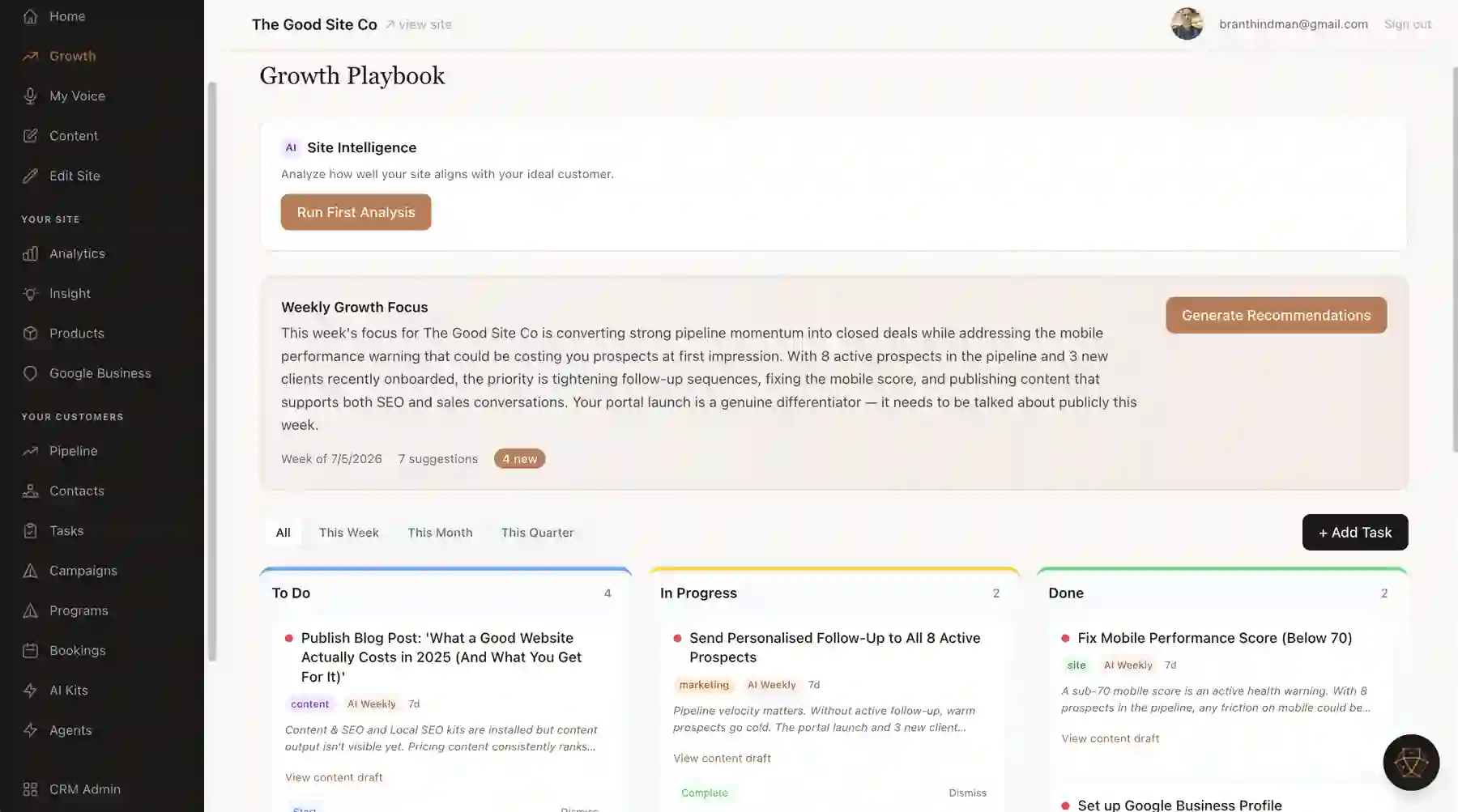
The Good Site, a living website that grows with the business
Problem
Most small businesses get a website built around the company: it launches once, then sits static while the market moves. It never learns who the ideal customer actually is, and it never changes to serve the business as it grows. It is a brochure, not an asset, and the owner has no way to make it earn its keep.
Constraints
- Build around the ideal customer, not the company org chart
- A human approves every change: no autonomous edits to a live business
- Ship real operating infrastructure (CRM, pipeline, bookings, billing), not just pages
- Owned and operable by non-technical business owners
Results
- A live product with paying customers, not a prototype
- Each site is aligned to its business from day one, and keeps adapting as it grows
- The full stack (site, CRM, growth, bookings, billing) runs as one coherent system
- Where my thesis comes together: psychology, technology, business, and AI in one product
What I did
- Built the product around the ideal customer, so the site, copy, and offering align with who actually buys
- Built the operating portal: a Growth Playbook with AI recommendations, site-intelligence scoring, CRM and pipeline, content, bookings, and billing in one place
- Wired an edit-bridge so owners change the live site in place, with a human approving every change before it ships
- Integrated the multi-agent system so the site keeps evolving as the business grows, not sitting static after launch
Built with
Product · Live Agent Network · 2026
Hive, a live network of agents that behave like real coworkers
Problem
A brand-new sending domain has no trust, so inbox providers bury its mail in spam. Warming it up requires a sustained, believable pattern of real engagement, not a script that pattern-matches to a bot.
Constraints
- Activity has to look genuinely human-shaped, not a fixed sequence
- Runs continuously, all day, with no manual babysitting
- Reliability is the product: a warmup that stalls sets the reputation back
Results
- Live across 13 mailboxes with zero failures
- Warms both brand-new domains and established brand inboxes
- The sales and marketing agents got measurably sharper cycle by cycle, the same self-improvement loop that runs across the OS, applied to a live business function
- Evidence that agent systems hold up in production, not just in a demo
What I did
- Gave each agent a persistent identity so its behavior is varied rather than scripted
- Wired agents to a real mail server, each owning and operating its own mailbox
- Ran the network continuously across new domains and established inboxes
- Layered an adversarial practice loop on top: a red team played the skeptical client and the distracted reader while a blue team played the senior sales and marketing operator, and each cycle scored and sharpened the next
Built with
Principal AI Architect · Multi-agent OS · 2021-Present
You^n, identity-aware, explainable multi-agent operating system

Problem
Most AI tools bolt intelligence onto existing workflows without rethinking the system. The result: agents that can't explain themselves, recommendations nobody trusts, humans stuck correcting what they can't understand. The hard problem isn't building an AI, it's building one a real person can actually rely on.
Constraints
- End-to-end ownership: architecture → data model → UX → deployment
- Explainability and auditability required as first-class architectural constraints
- Human-in-the-loop by design, not as an afterthought
Results
- Production AI OS built around human legibility as a first-class constraint
- Full audit trail on every agent decision, no black boxes
- End-to-end architecture and execution from zero to production
What I did
- Designed multi-agent orchestration with explicit responsibility boundaries per agent
- Built identity-aware reasoning layer for context and workflow alignment
- Implemented transparent scoring and decision audit trails throughout
- Owned the full stack: orchestration, data models, frontend UX, backend, deployment
Built with
Founder · Multi-agent Operating System · 2024-Present
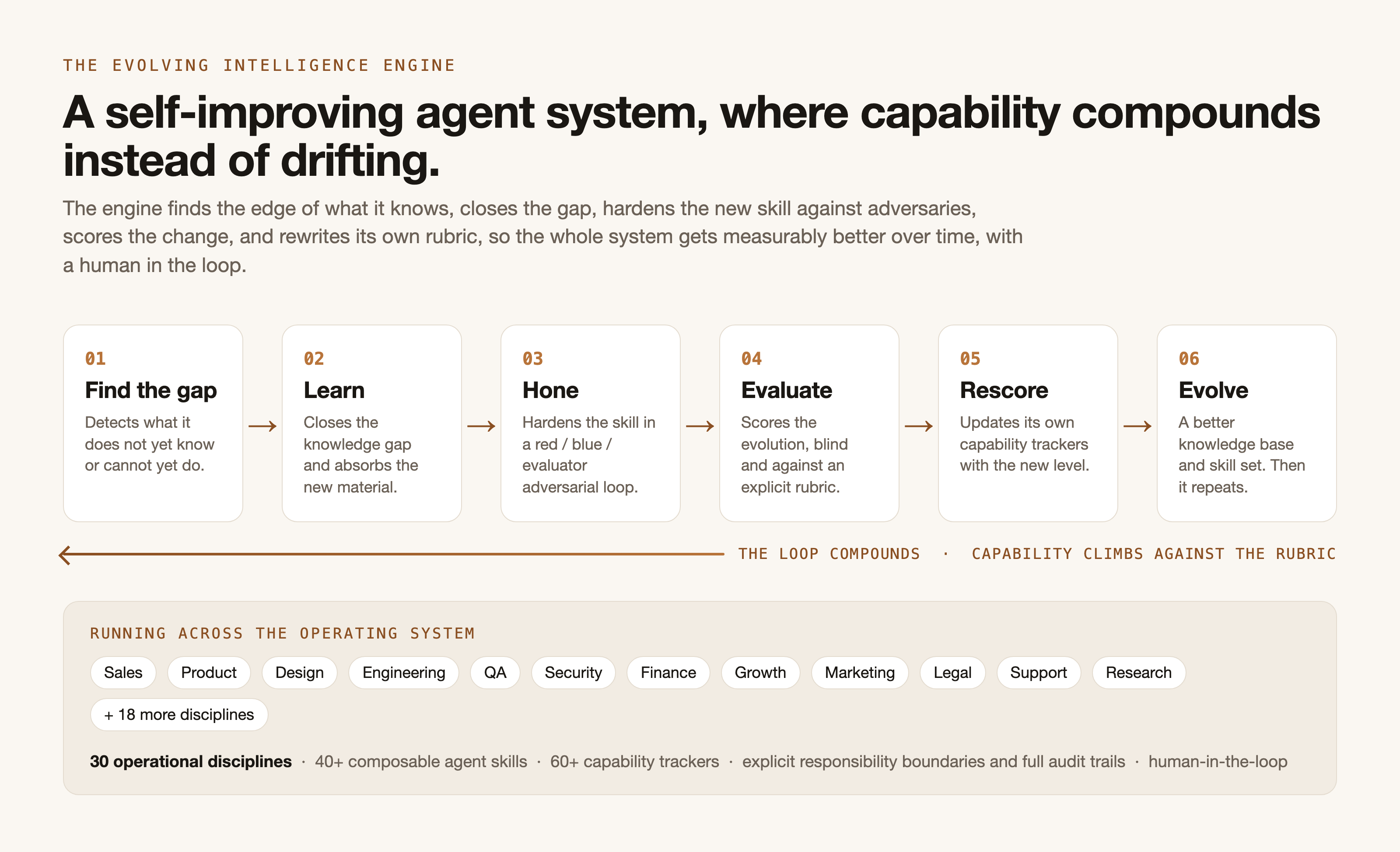
An AI operating system that runs a company across 30 disciplines
Problem
AI agents are easy to demo and hard to operate. I did not want a chatbot or a single workflow, I wanted an operating system: run an entire company's operations, sales, product, design, engineering, QA, security, finance and more, as accountable agents that improve themselves over time, with a human always in the loop. A conversational trigger is one entry point, it is not the system.
Constraints
- Every discipline needs its own agents, skills, and quality bar, not one monolithic prompt
- Agents must be accountable: explicit responsibility boundaries and full audit trails
- Capability has to compound, the system must measure and improve itself rather than drift
Results
- A working operating system, not a demo: it runs my company day to day across 30 disciplines
- 23,786 files and 4.7M lines in one coherent multi-agent architecture, built and maintained largely solo
- Capability compounds: the red/blue/evaluator loops and IQ trackers raise the bar over time instead of drifting
What I did
- Built a multi-agent OS spanning 30 operational disciplines, each run by its own agents and skills
- Designed 40+ composable agent skills that sequence into end-to-end workflows with isolated memory
- Built adversarial self-improvement into every discipline: red-team / blue-team / evaluator trios that practice against each other and keep the lessons
- Instrumented 60+ capability trackers so each discipline is scored and improves against an explicit rubric
- Kept a human in the loop throughout, with explicit responsibility boundaries and audit trails
Built with
Head of AI · Voice + RAG · HumanOp · 2024-2025
HAi, voice RAG agent MVP delivered in <8 weeks

Problem
Deliver a voice-based retrieval-augmented agent that answers accurately and interacts in a way that feels coherent, grounded, and usable, not just technically correct.
Constraints
- 0→1 delivery under an aggressive timeline
- RAG systems require precision and failure-mode awareness from the start
- User trust and clarity are part of the technical definition of done
Results
- MVP delivered from zero to production in under 8 weeks
- Polymorphic RAG routing live, structured, unstructured, and voice-context paths
- Cross-team enablement through structured internal AI bootcamps
What I did
- Delivered the HAi voice RAG MVP in <8 weeks
- Developed the Polymorphic RAG Vector-based Human Authentic Intelligence engine
- Built guardrails and trust-oriented interaction patterns into the core loop
- Ran AI bootcamps for internal teams: Operations, R&D, and Marketing/Sales
Built with
Track record
Research · Simulation · Evaluation · 2025
Coherence Benchmarking Lab, simulation benchmarks for quantum coherence topologies

Problem
How does the shape of a system, the topology of how information and state propagate through it, affect coherence and reliability at scale? The Unity Pixel Framework is a reproducible simulation study comparing tiling versus linear-chain topologies, the same benchmark-first rigor I bring to evaluating any system.
Constraints
- Novel evaluation methodology, no existing benchmark to build from
- Results must be reproducible and interpretable, not just numerically interesting
- Simulation runs expensive: design must minimize compute while maximizing signal
Results
- Tile topology outperformed linear chain at high step counts, coherence advantage documented
- Reproducible benchmark run published with full JSON artifact
- Unity Pixel Framework theory documented and available as a public 1-pager
What I did
- Designed the Unity Pixel Framework, a tiling-based coherence model for information propagation
- Built simulation benchmarks comparing tile vs. linear chain topologies at scale
- Ran comparative benchmarks across 240 steps with controlled seed for reproducibility
- Published theory overview and benchmark data as open artifacts
Built with
Artifacts
Simulation Benchmarks of Quantum Coherence
Tile vs. linear chain topologies, full reproducible benchmark paper
The Unity Pixel Framework
Theory overview, information topology and coherence design principles
Benchmark Run, Tile vs Linear, Seed 5
240-step simulation artifact (JSON), full reproducible run data
Founder · Multimodal wearable AI · Kings of the Beach · 2024-Present
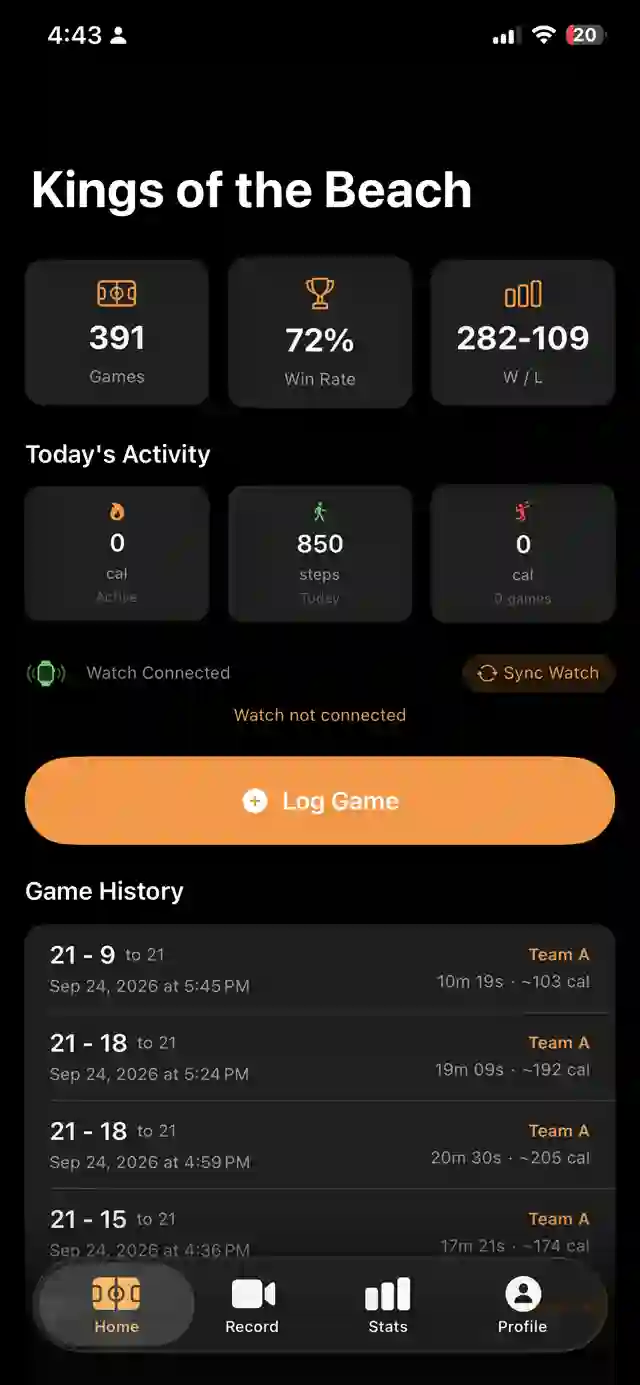
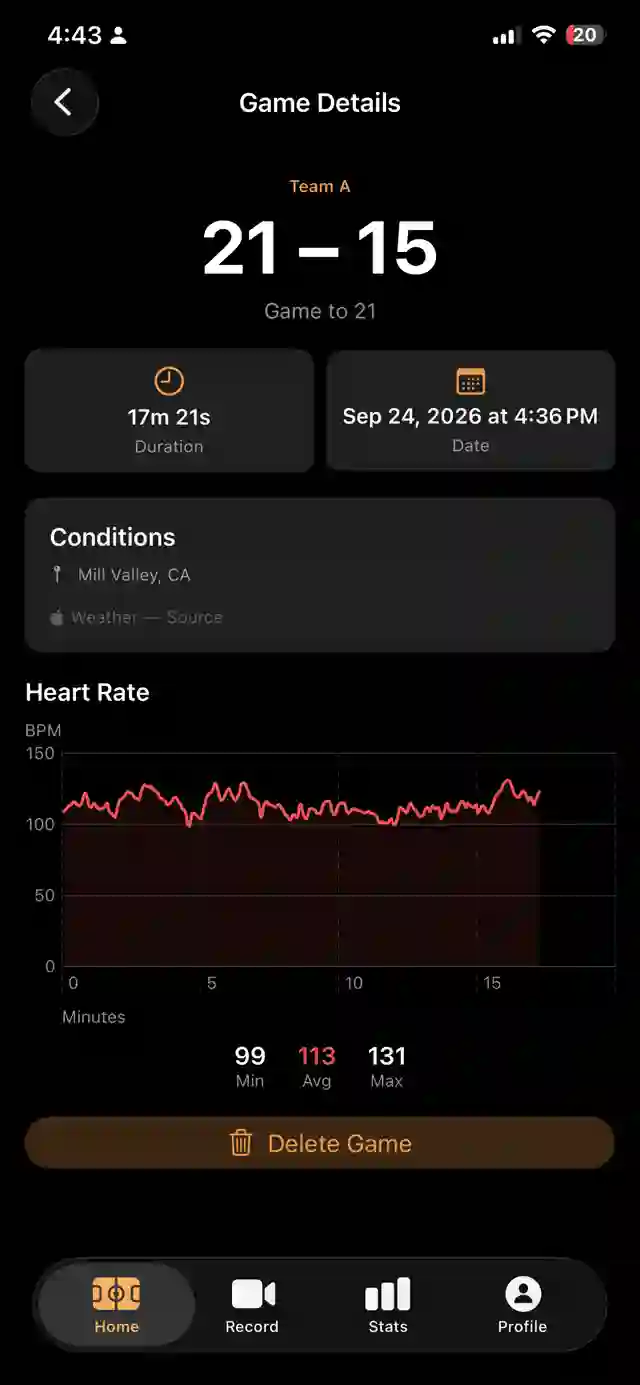
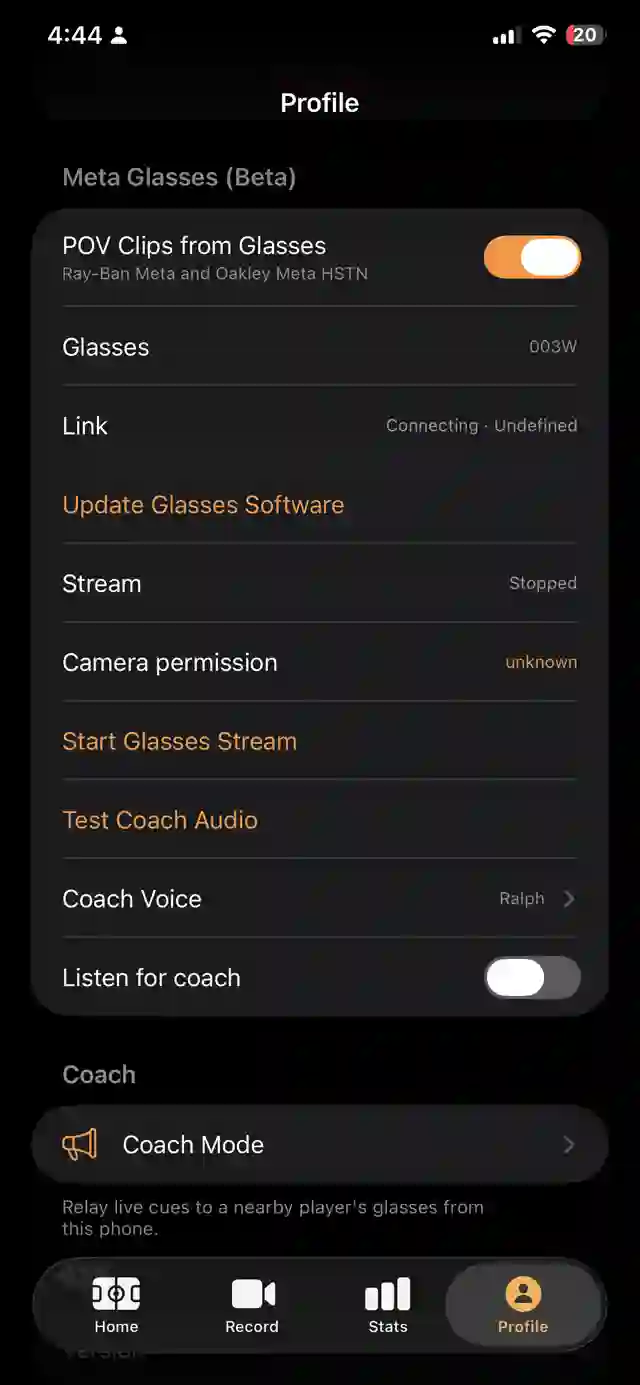
Kings of the Beach, hands-free replay and AI stats across watch, phone, and Meta glasses
Problem
Beach volleyball gives you no easy way to score, replay, or measure a point in the moment. Filming needs a tripod and a spare person, stats need manual tracking, and the play never stops for either. The goal was a system that disappears into the game: score, replay, and coach hands-free, from the player's own point of view.
Constraints
- Three devices kept in sync: Apple Watch, iPhone, and Ray-Ban Meta smart glasses
- Everything hands-free and glanceable, a player cannot stop mid-rally
- On-device computer vision, no cloud round-trip and no filming setup
- Built on early, personal Meta SDK access, prototyped before the SDK was public
Results
- Live on the App Store, one paid product shipped solo
- Hands-free instant replay and automatic stats from wearable hardware
- One of the first apps built on the Ray-Ban Meta SDK, prototyped pre-public
What I did
- Built a rolling 30-second POV replay buffer triggered from the Apple Watch, saving the last point from the glasses first-person view
- Shipped on-device computer vision that auto-tracks kills, aces, and digs, with per-player Bronze-to-Diamond skill ratings and an ELO ladder
- Integrated Apple Watch live scoring, heart rate, and arm speed
- Designed and shipped the whole multi-device system end to end, to the App Store
Built with
Earlier leadership & ventures
Two decades of shipping and leading before the AI work, the range and scale behind the systems above.
Things I build because I love building
Shipped because I could not not build them.
Native apps I built end to end for the people I care about. Same instinct as the rest of the work: make the technology disappear into something a real person can actually use.

A shared movie and TV memory for a household. Accessibility-first for older users: spoken reviews, high contrast, one shared library, so "did we watch this, and did we like it?" is answered at a glance.

A living family memorial, plus a voice-first companion: a daily photo from your family history and the story you remember about it. A gamified way to build a family scrapbook, and to help an elder hold onto their own history as memory begins to fade.