About
The psychology behind
the AI.
Most AI architects studied computer science. I studied how humans make meaning at the edge of ordinary experience — and then spent 20 years figuring out how technology fits into that.
The MA in Transpersonal Psychology, the monastic residency, the sculpture practice — these aren't hobbies I list to seem interesting. They're the reason my AI systems feel different. I design for the human in the loop. Always have. The technology caught up to the philosophy.
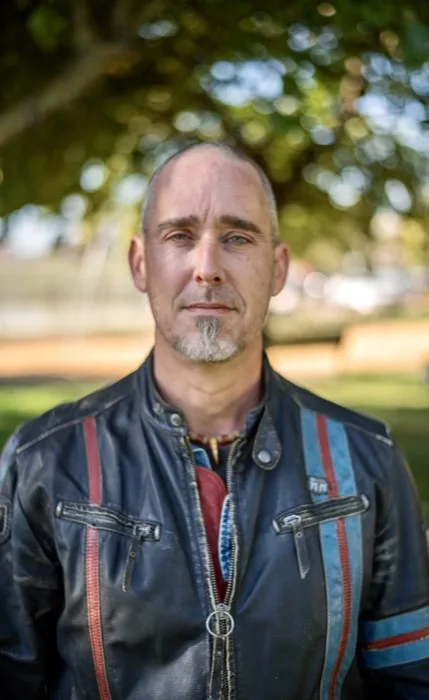
Building since 1998
Human + system thinker
The Arc
How I got here
1992–1997
Chemistry & Psychology
St. Olaf College. Studied both — the precision of molecular systems and the complexity of human ones. The combination never felt contradictory.
1998
Six months in a monastery
Theravada monastic residency at Wat Umong, Chiang Mai, Thailand. Learned something about attention, systems, and what it means to be present inside a process.
2000–2001
Transpersonal Psychology
MA at Naropa University. Studied how humans make meaning at the edge of ordinary experience. Still the most useful thing I've ever learned for designing AI systems.
2008–2015
Sounds True — technology for transformation
Director of Technology for one of the world's leading conscious media publishers. 350+ authors. Global distribution. Where I learned that technology serving human growth has different requirements than technology serving transaction volume.
2017–Present
AR Hero & Time Matrix
Built a WebAR SaaS from scratch. Also built a 30-foot geometric sculpture at Burning Man with embedded AR. Because the same instinct drives both: make the invisible visible.
2021–Present
Agentic AI — human-centered by design
You^n, HAi, and every AI system since: designed for the human in the loop, not around them. The Psychology degree isn't a footnote. It's the architecture.
Beyond the work
The rest of the picture
I'm a sculptor and digital artist. My Burning Man piece — Time Matrix, a 30-foot geometric structure exploring the mathematical relationship between the cube and the octahedron — was published in the Bridges Organization's research proceedings. The same spatial and structural thinking that went into that sculpture goes into AI architecture.
I work with young adults on the autism spectrum on the developmental use of AI in their daily lives. This isn't charity — it's the most rigorous human-centered AI design work I do. When you're building AI for people who experience the world differently, you can't rely on assumptions. You learn exactly where the seams are.
Motorcycle rider. Volleyball player. Six months in a Thai monastery in 1998. I'm not listing these to seem well-rounded. I'm listing them because the same thread runs through all of it: I'm drawn to systems — physical, biological, social, computational — and the places where they meet human beings.
Education
- M.A. Transpersonal Counseling Psychology — Naropa University
- B.S. Chemistry & Psychology — St. Olaf College
- Six-month Theravada monastic residency — Wat Umong, Chiang Mai
Published
- "The Flexagon, a Bridge between the Polarized and Dualistic Dimension Reversing Nature of the Cube and the Octahedron" — The Bridges Organization, 2019
Currently
- Consulting on agentic systems and production AI reliability
- Principal AI Architect at You^n.tech
- Working with neurodivergent youth on developmental AI adoption
The case for hiring me
Most AI architects understand the system.
I understand the human who has to trust it.
The Psychology MA isn't a curiosity — it's the reason the systems I build get adopted, not just deployed. When I design an AI interface, I'm thinking about what happens in the user's nervous system when they see the output, not just whether the output is correct.
If you're building AI that real humans have to rely on — in production, under pressure, with their judgment and livelihood at stake — that's the problem I was built to solve.
Bay Area / Remote · available now